
revitalise & regenerate
Celora Vita
Also called: Celora, the Protein Facial, amino acid skin booster.
Celora Vita at Dr Munroe Clinic is an injectable skin treatment that combines nine amino acids with low-molecular-weight hyaluronic acid. The hyaluronic acid here is different from the kind used in fillers or in Profhilo: it is not cross-linked and is used for hydration and to support the environment of the skin, while the amino acids are the substrates the skin uses to make collagen, elastin and the extracellular matrix. Treatment may suit skin that looks dull, dehydrated or less firm, and fine lines, and optimal results are usually seen after three treatments, three weeks apart.



Or scan with your phone
what it treats.
Because collagen and elastin are proteins, the skin relies on an adequate supply of amino acids to produce them. Celora Vita delivers selected amino acids directly into the skin, providing local building blocks that support collagen, elastin and extracellular-matrix renewal. This may be particularly relevant as amino-acid availability and the skin's regenerative efficiency decline with age, but it is not a substitute for adequate dietary protein or good nutrition.
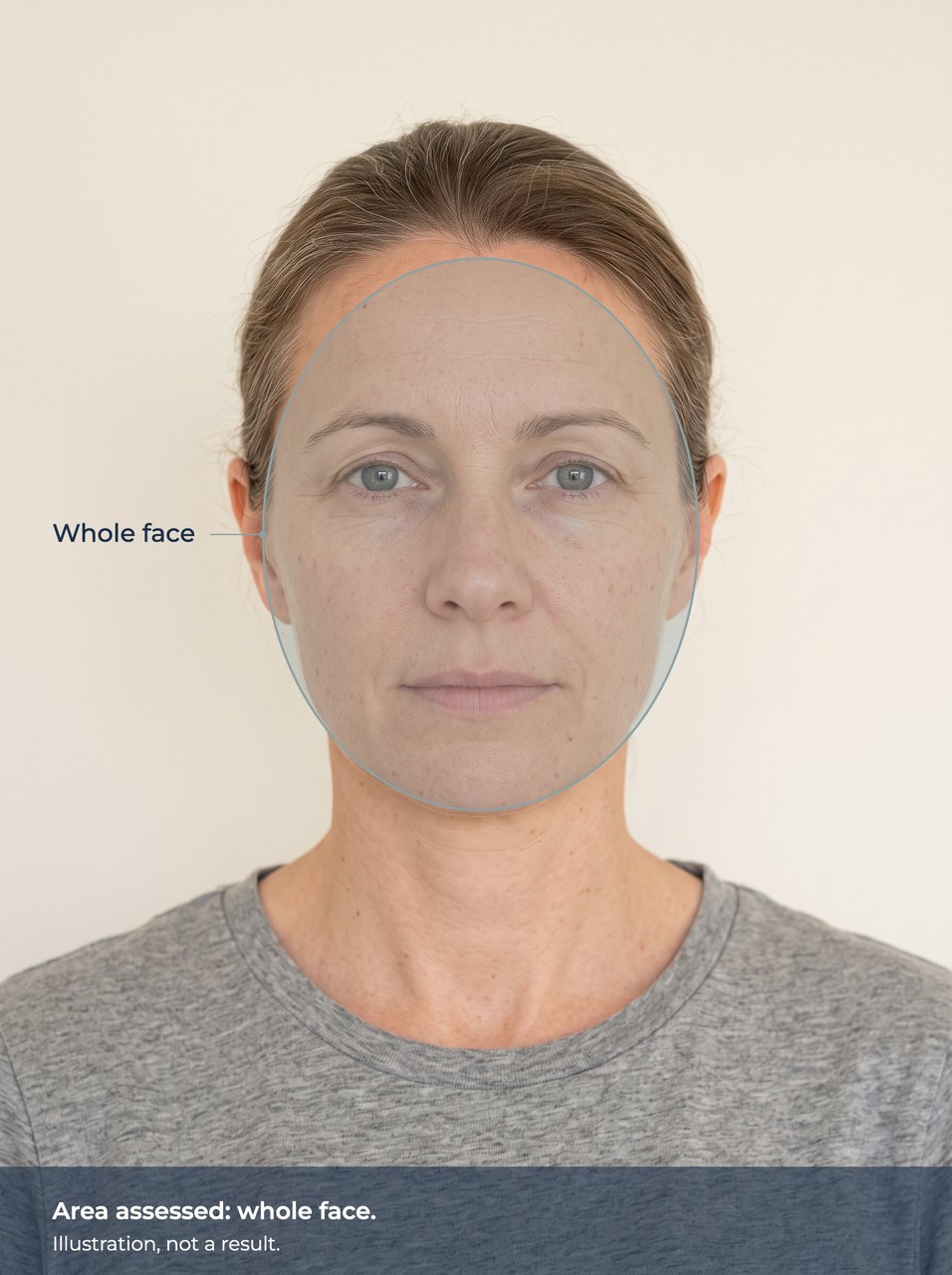
Celora Vita, from DermaFocus, is a CE-marked medical device that delivers a complete amino acid complex, including the three branched-chain amino acids leucine, isoleucine and valine, together with hyaluronic acid for hydration, directly into the skin. It may suit fine lines, dehydrated or dull skin, uneven texture and early loss of elasticity, on the face, neck and décolletage, and is sometimes used alongside polynucleotides or Profhilo within a plan.
what it doesn't treat.
Celora Vita works on the quality of the skin, so it will not add volume, lift heavier skin or relax expression lines. Deeper loss of support may suit collagen biostimulation, and lines caused by movement respond to anti-wrinkle injections.
the assessment.
The assessment looks at the skin as a whole rather than matching a product to a single need, as most skin benefits from more than one kind of support. Celora Vita, Profhilo and polynucleotides each contribute something different, and many plans combine two of the three in sequence.
what happens on the day.
Following consultation, the risks and side effects are explained, consent alongside your medical history is taken and photographs are taken for the clinical record. Numbing cream is applied, and the product is placed as a series of small injections across the treatment area, which takes around 20 to 30 minutes.
recovery.
Small bumps at the injection points usually settle within a few hours. Some people bruise and others do not, and this cannot be predicted in advance. Avoid make-up on the area for the rest of the day, and strenuous exercise, saunas and heat for 24 hours. There is minimal downtime and most people return straight to their day.
results.
Some patients notice improved hydration, softness and glow after the first treatment, while improvements in texture, firmness and overall skin quality build progressively over the full course. Maintenance is usually a single session every six to nine months, set at review.
who it isn't for.
Treatment is not suitable during pregnancy or breastfeeding, or where there is active skin infection at the site. Known allergy to any of the ingredients is discussed individually.
price.
Prices are available on the price list.
common questions.
Where on the face can Celora Vita be used?
Across the whole face: the upper, middle and lower thirds, as well as the neck, décolletage and hands. That is one of the ways it differs from Profhilo, which is used on the mid and lower face only.
Celora Vita or Profhilo?
Profhilo focuses on hydration and firmness through hyaluronic acid alone, while Celora Vita adds the amino acids the skin uses to make collagen and elastin. They are often used together in a plan, and the assessment decides which comes first.
Is it a filler?
No. It contains a small amount of hyaluronic acid for hydration, but it is placed within the skin to improve its quality and does not add volume.

Clinically reviewed by Dr Tiffany Munroe, MBBS MRCS, GMC 7293952.
Last reviewed October 4, 2026. Next review October 4, 2027.
About Dr Munroethe Munroe Method.


refreshed. refined. you.
Or scan with your phone